Medela’s New Wearable Isn’t “Magic” — Here’s What It Actually Does (and Why That Matters)
If you’re here because you’ve heard buzz about Medela’s new $400 wearable pump and want to know whether it’s actually worth the price, let’s cut straight to it:
It works—but it isn’t magic.
And at $400, “almost there” matters.
As someone who is more than willing to spend serious money on a pump when it offers something truly new, I had high expectations for this release. Medela has been developing this technology for years, and on paper, the concept looked promising. In practice, what we received feels less like a polished innovation and more like a rough draft that reached the market before it was fully ready.
Here’s what you need to know.
The Core Issue: Constant Suction (and Why It Matters)
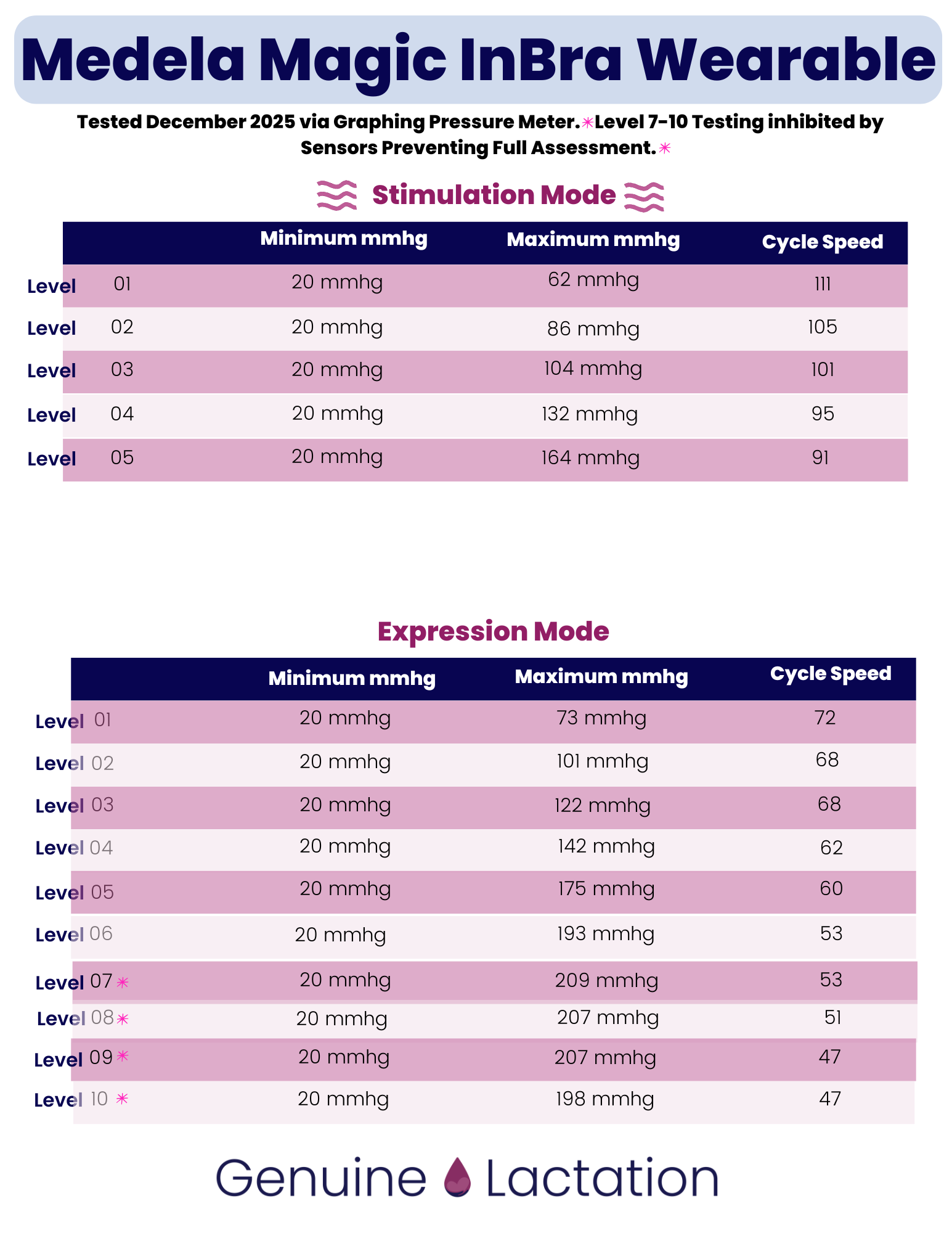
This wearable uses constant suction, which behaves very differently from standard pump suction.
Standard suction works on a pull-and-release pattern—pull, release, return to zero. Constant suction pulls and partially releases but never fully returns to zero. The nipple remains under continuous tension.
Constant suction can reduce leaks, which is appealing in a wearable. However, unless the system is exceptionally stable and well-controlled, it significantly increases mechanical stress on nipple tissue.
This pump does not manage that tension particularly well.
A Familiar Problem, Repeated
Several years ago, another constant-suction wearable launched with a similar instability issue. Suction dropped too low without fully releasing, which led to excessive tissue movement rather than true stabilization. That design caused widespread nipple pain and damage and was later corrected.
This pump repeats that same mechanical pattern.
The difference now is that we can actually see what is happening. Medela includes a brief internal light that gives a short window into the tunnel. While helpful for sizing checks, it also confirms what many of us already suspected: constant suction combined with instability creates excessive tissue movement.
That movement is what drives pain, swelling, and trauma.
Inserts, Flanges, and a Very Narrow Margin for Error
Yes, inserts can be used with this pump. There is no sensor preventing insert use.
However, the flange design tapers in a way that makes inserts difficult to stabilize. Certain insert styles compress unevenly or allow subtle rocking. On a constant suction pump, that movement is not harmless.
What we observed clinically included vertical nipple fissures that did not originate at the tip or base, but rather appeared symmetrically on opposite sides of the nipple. This pattern aligns with lateral friction caused by internal piston movement rather than typical pump trauma.
If you can comfortably use one of Medela’s native flange sizes, you may avoid many of these issues. If you rely on inserts, careful monitoring is essential.
Assembly, Errors, and Misleading Feedback
This pump is not intuitive to assemble. All components must align precisely. When they don’t, the pump frequently throws a “nipple alignment” error—even when alignment is correct.
That error messaging sends parents troubleshooting their anatomy instead of the assembly, which quickly becomes frustrating. Even with extensive experience troubleshooting pumps, I found myself repeatedly needing to take this one apart and start over.
For a premium pump, that level of friction is problematic.
Sensors That Limit More Than They Help
The pump attempts to detect milk and automatically transition between modes. In practice, these features are unreliable. Auto-switching frequently failed, even with visible milk present.
Movement triggers a vibration alert intended to reduce leaks. Unfortunately, that vibration is aggressive enough to discourage normal activity. Slight bending or shifting can set it off, undermining the primary appeal of a wearable pump.
The motor itself is very quiet, which is a genuine positive. However, the vibration alerts quickly negate that advantage.
Capacity and Missed Opportunities
The container holds approximately 5 ounces. At this price point, competing wearables are offering larger capacities that better support full pumping sessions.
A larger container would have been a meaningful differentiator. Instead, the pump offers a small profile without delivering a clear functional advantage.
Customer Service Is Not Ready for This Pump
Constant suction pumps require strong customer support. This one does not have it.
Resetting comfort vacuum settings involves unnecessary steps. Bluetooth pairing is clunky. Firmware feels outdated. When pain or early tissue damage was reported, guidance amounted to continuing use unless bleeding occurred.
That response is not acceptable for a pump with such a narrow margin for safe use.
Lactation professionals cannot compensate for inadequate customer service infrastructure.
Is This Pump Unsafe?
No. Many people will be able to use it without issue.
However, it is unforgiving. Based on current clinical experience, success rates appear similar to earlier constant-suction wearables before their design corrections—around 50% without targeted support.
With experienced guidance, that number may improve. Without it, frustration and nipple damage are far more likely.
Who This Pump Will Most Often Serve
In practice, this pump is most likely to show up in two scenarios:
Parents considering it and seeking help to avoid damage
Parents who have already used it and now need help repairing damage
Managing tissue trauma from constant suction wearables requires a specialized skill set that many providers have never needed to develop.
Final Thoughts
This pump was close—but not close enough.
With better firmware, clearer controls, stronger insert compatibility, and appropriate customer support, it could have been something special. As it stands, it does not offer enough innovation or ease of use to justify its price.
There are other pumps on the market that cost less, offer more flexibility, and carry fewer risks.
Related Reading: Understanding Constant Suction Wearables
Several of the concerns discussed in this review are not new. We have seen these exact mechanical patterns before with earlier constant-suction wearables—most notably from Willow. If you want deeper context and visual examples, these resources are essential background reading:
Willow Gen 3: Why It Caused Pain for Some Parents
https://www.genuinelactation.com/blog-for-breastfeeding-families/hacks-for-willow-pump-gen3-pain
Mushroom Nipple: What It Is, Why It Happens, and Why You Don’t Want It
https://www.genuinelactation.com/blog-for-breastfeeding-families/mushroom-nipples-and-muffin-nipples
Flange Sizing That Actually Protects Tissue
https://www.genuinelactation.com/flange-sizing
Need Help With This Pump—or Choosing a Better One?
If you’ve already purchased this pump and are struggling, you don’t need to figure it out alone. Constant suction wearables require very specific setup, sizing, and troubleshooting, and early support can prevent long-term nipple damage.
If you’re still deciding which pump to purchase, we can also help you choose a pump that fits your anatomy, feeding goals, and lifestyle—often for less money and with fewer limitations.
👉 Book a consultation with Genuine Lactation today
We’ll help you work with what you have—or guide you toward what will work better for you.
Because pumping shouldn’t be a $400 guessing game.