Strawberry Milk and Blood Clots: All the Details
Have you ever taken your pump off to find your milk is pink? Or bright red? Or contains actual bright red blood clots? Ever seen those photos in a social media group of bloody milk that seem So. Scary?
That is what we are referring to when we say “strawberry milk.” It’s just a more palatable term for bloody breast milk.
If you’ve found blood in breast milk while pumping, pink breast milk, or even blood clots in pumped milk, this usually points to nipple trauma, breast inflammation, clogged ducts, or infection—and it deserves a closer look, not panic.
This can happen with any pump session with any pump. With wearable pumps, though, typically, you have no idea it’s happening until the session is over, which makes for a shocking discovery that alarms a lot of parents. It can be really scary to find bloody milk, but it happens, and it’s not something to panic about. You need lactation support, but rarely, is this an emergency.
Blood in Breast Milk While Pumping: What Is Happening and What Should You Do?
Strawberry milk is the result of injury, trauma, or infection of the breast and nipple resulting in blood being transferred with the breast milk during pumping or nursing. Keep reading to find out what to do if this happens to you!
Where is the blood coming from?
Clearly, the issue is there is blood in the pumped milk, but sometimes, it isn’t immediately obvious where it’s coming from. The blood can come from nipple damage, infection of the breast, inflammation, or injury in the milk ducts, or sometimes, it is from a milk clog being released.
How do you figure out which cause you are dealing with?
If you are finding blood in your milk, you need to see a lactation consultant! Typically, the causes are fairly benign, and many are easily remedied. But sometimes, you need medical attention to heal an infection or injury, and delaying this can have consequences. A lactation consultant is able to fully assess and make sure all issues are identified and remedied.
If you need help figuring out whether this is a flange issue, a latch issue, inflammation, or infection, our consultations are designed to sort through the why so you can stop guessing.
So what does an IBCLC assess for if this is happening?
Flange Fit
Assess latch and positioning if nursing baby
Screen for oral restrictions and dysfunction that could be contributing to nipple damage, even if latch and positioning look good
Assess for signs of infection and facilitate referrals for medical care when necessary
Assure milk clogs are addressed and the breast is emptying well
Assess and address nipple damage
Should I call my doctor?
Unless you have clear signs of an acute infection (warm red spot, streaking on the breast, yellow pus on the nipple, fever, general feelings of illness), your doctor is unlikely to have the necessary training to provide the comprehensive support you need. Unfortunately, you may receive unnecessary care or ill-informed advice about breastfeeding management that results in poor outcomes and delays full resolution of your problems. Make your first stop is the LC unless you have those signs of acute infection. If you have signs of acute infection, call your doctor AND the LC to get the medical attention and breastfeeding support you need.
Is the milk safe to feed?
I fully acknowledge it may seem gross to many parents, but the milk is considered safe unless the breastfeeding parent has a blood borne illness that would risk transmission to the baby. Thankfully, part of prenatal care in the United States is comprehensive bloodwork for concerns like this, so most parents would know and be under medical care for these concerns.
If you would prefer to limit your baby’s exposure to the blood, consider refrigerating the milk to allow the blood and milk to separate, then siphon off the milk.
Always remember, this likely happens with direct nursing as well, and unless baby spits up the strawberry milk, we would be none the wiser.
And if pumping has been a struggle in general, not just a bloody one, our On-Demand™ education can help you troubleshoot fit, settings, and real-world pumping problems without relying on random internet advice at 2 a.m.
Should I accept donor milk with blood in it?
Milk banks do not accept donor milk for pasteurization that contains visible blood. Peer-to-peer milk sharing should not be done with milk that contains blood. There are inherent risks with peer milk sharing, and without proper lab work, this milk presents with an increased risk of disease transmission that is worrisome.
Is Blood in Breast Milk More Common with Wearable Pumps?
Yes, but the reason has little to do with the pump itself and more to do with flange sizing. Flange sizing has traditionally been done by observing the nipple moving in a flange and adjusting based on appearance. This method can get reasonably close with many traditional pumps, but with wearable pumps, we are dealing with an increased need for flange sizing to prevent damage.
If wearable pumps keep leaving you with sore nipples, output issues, or milk that suddenly looks like it belongs in a crime scene, start with our flange sizing resources.
Real-World Pump Fit Issues That Can Cause Strawberry Milk
In real life, this is often less about your pump being “too harsh” and more about the setup being off. The wrong flange size, inserts that change fit in an unhelpful way, too much suction, a bra that compresses the pump awkwardly, or nipple tissue rubbing in ways you cannot see during the session can all contribute to bleeding, inflammation, and scary-looking milk. Wearables make this extra sneaky because you usually do not see the problem until the session is over.
In Summary:
Strawberry Milk and Blood Clots are a somewhat common occurrence
This is rarely an emergency, but you should contact a lactation consultant right away for the guidance necessary to resolve this concern.
If you have signs of an acute infection, call your health care provider immediately AND a lactation consultant to resolve the issue.

For ongoing pump troubleshooting and brutally honest wearable pump discussion, join Wearable Pump Paperweight Prevention.
Example Photos of Strawberry Milk:
Warning: These pictures may be graphic and upsetting for some. All parents who were kind enough to donate their photos for our use have recovered and are perfectly fine!

This clog got caught up in the flextube unable to pass through the bag valve.
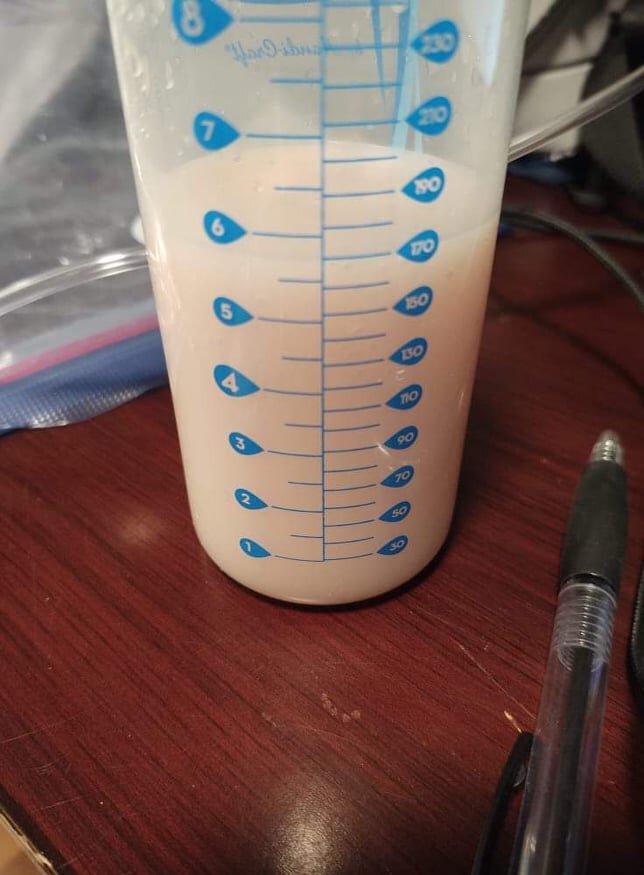
See the ever so slight pink tint here? This milk is what tipped us off to a subclinical staph infection causing bleeding inflammation for this pumping parent.
These bloody clogs came from a nasty bout of mastitis related to oversupply and poor breast drainage.


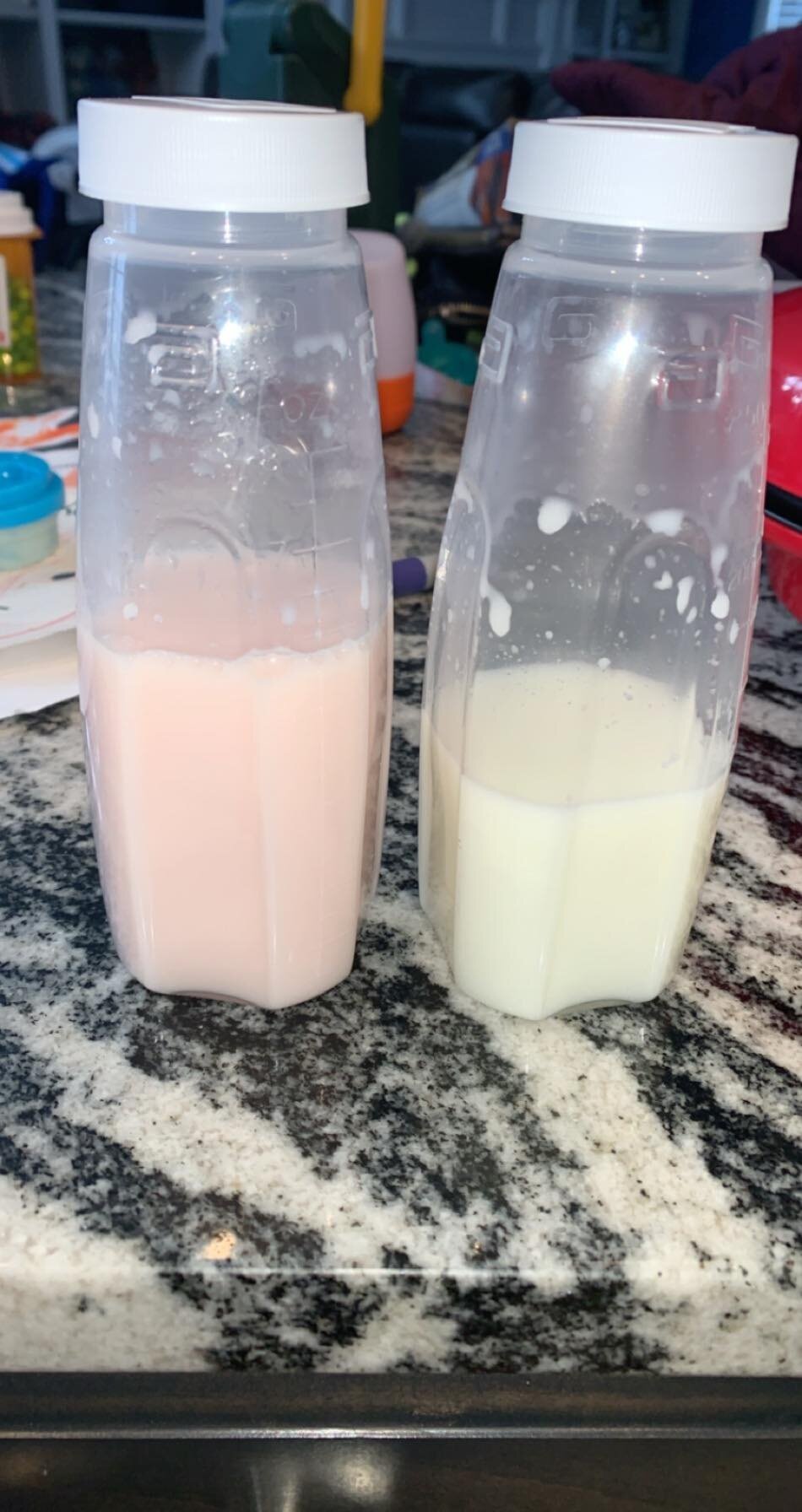
Note how one side is blood tinged
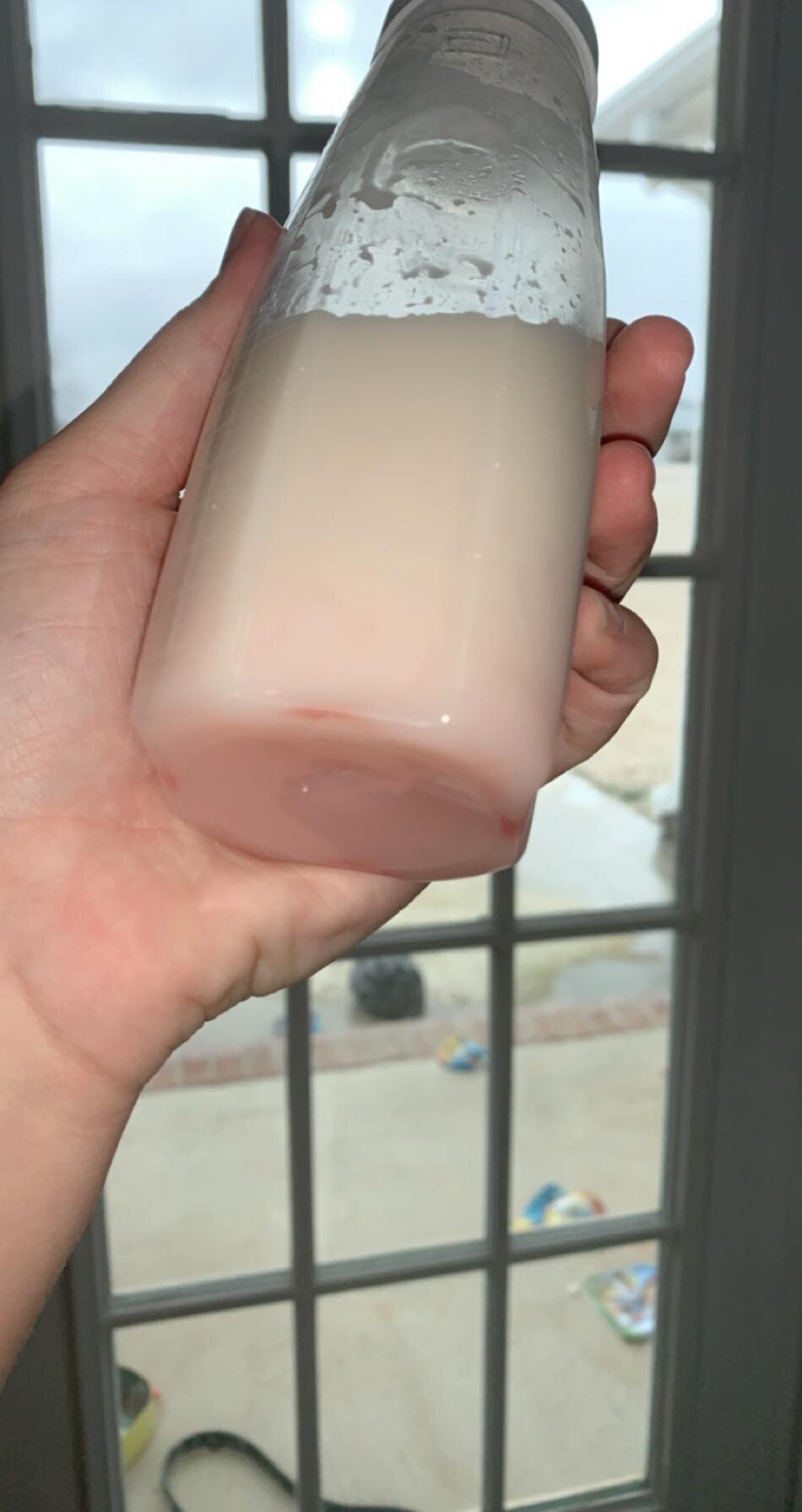
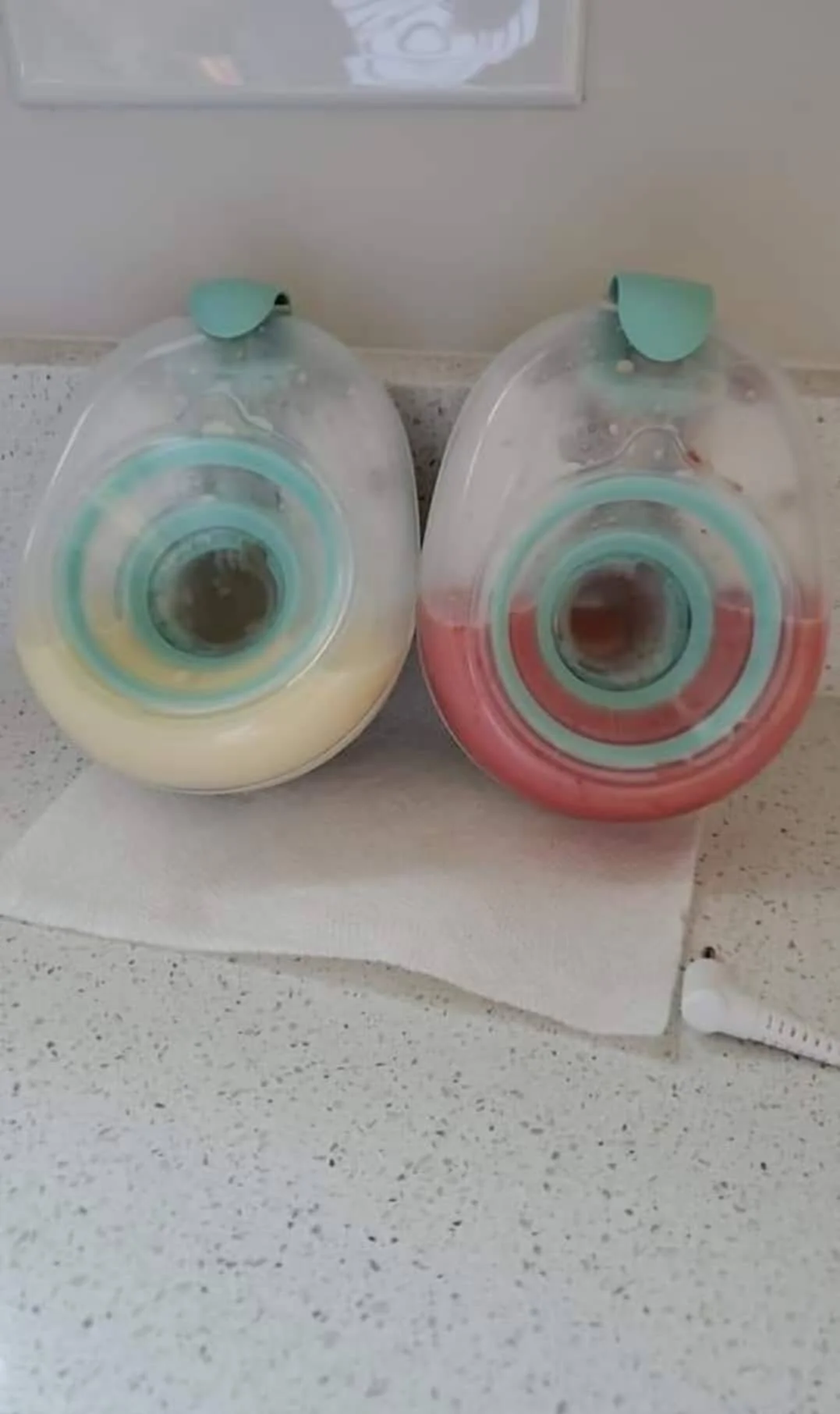
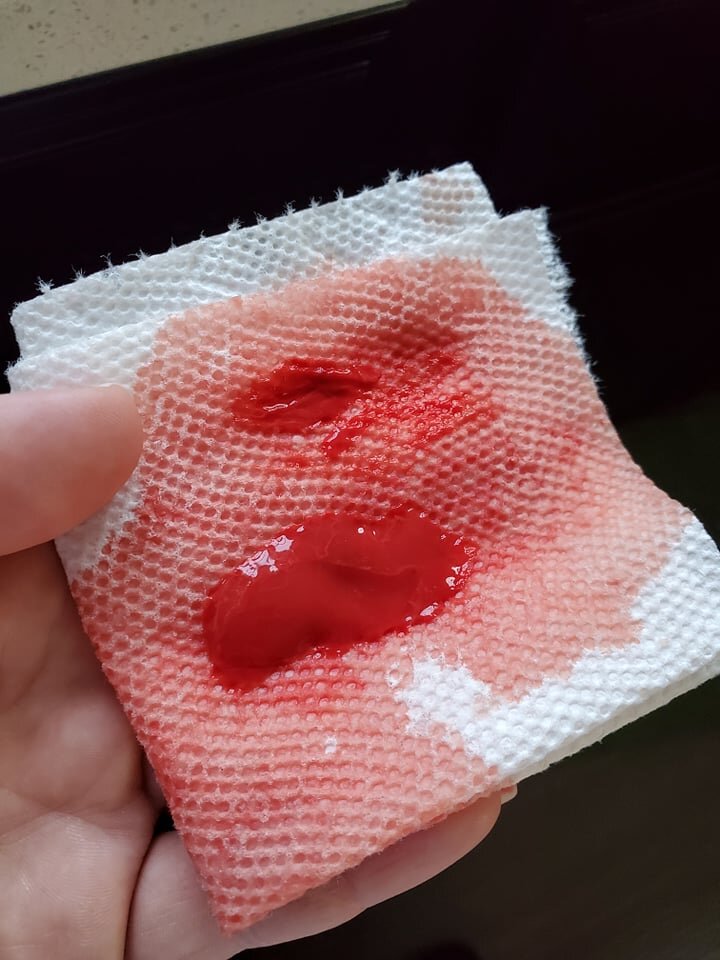
The cause for this was never identified, but it was most likely an inflamed clogged milk duct that bled when it broke loose.
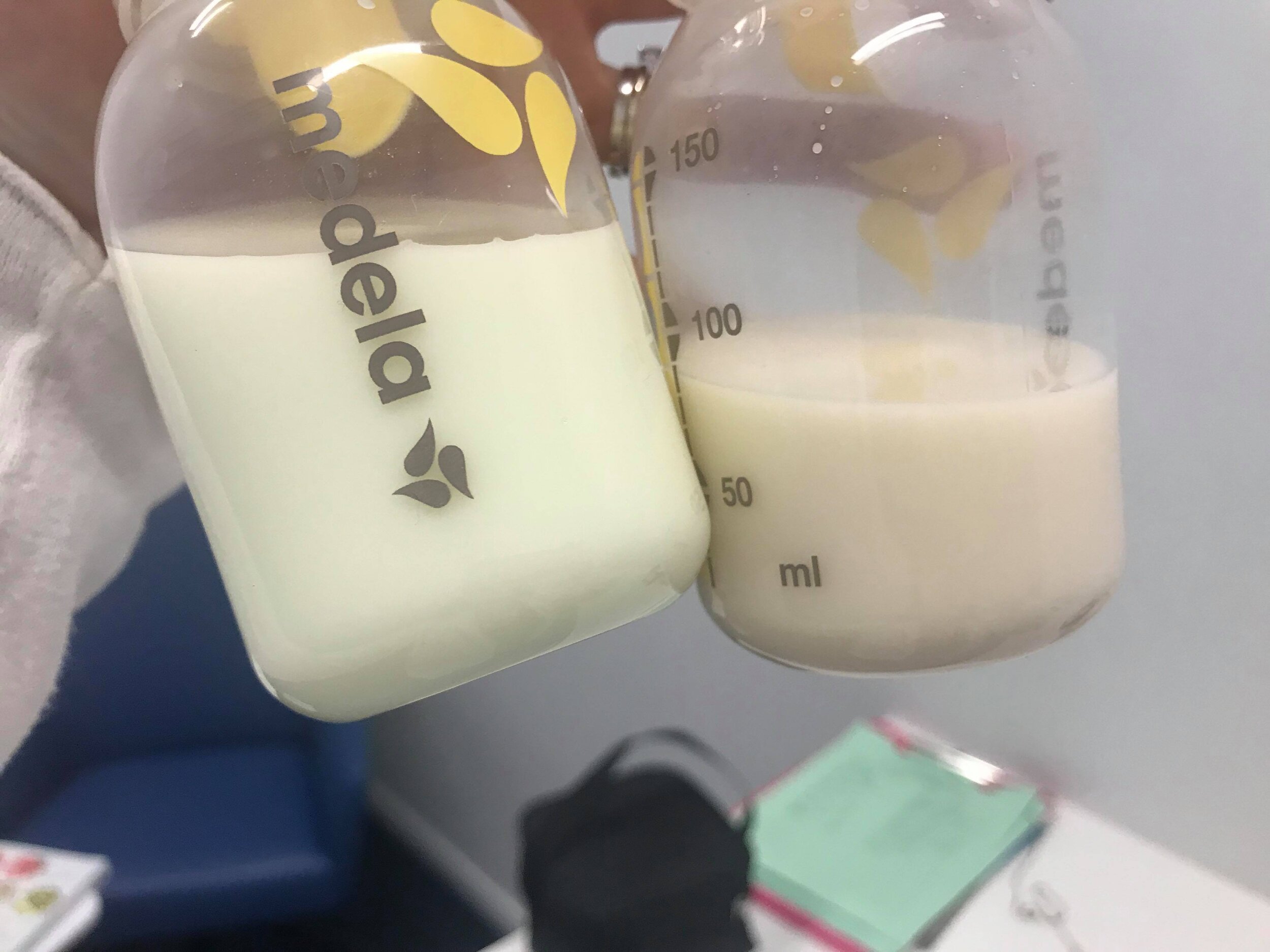
The bottle on the right has a subtle pink tinge. When it is this subtle, it may be easily missed.

This was likely the result of an injury to the breast from a child colliding with the parent. There was no reported pain.


If you’re here, your search history probably looks like this:
why is there blood in my breast milk while pumping
pink breast milk after pumping
blood clots in pumped milk
strawberry milk breastfeeding meaning
is bloody breast milk safe for baby
wearable pump causing nipple bleeding
blood in breast milk from flange too small
can mastitis cause blood in breast milk
blood in milk from clogged duct
nipple trauma from pumping
do I need to dump breast milk with blood in it
when to call doctor for blood in breast milk